Some people with AFib need electrical cardioversion to "reset" their heart's rhythm. While you're under mild anesthesia, a doctor uses patches or paddles to gently shock your heart. Your doctor might want to do an ultrasound first to check for clots in your heart.
Full Answer
What is the pharmacologic management of atrial fibrillation (AFIB)?
While there are many ways to treat atrial fibrillation – the best course of action, if you are worried about your heart health, is to consult your GP. In particular, you should speak to your GP if you notice a sudden change in your resting heart rate, if it is below 60 beats per minute or over 100 beats per minute and especially if you are having other symptoms of atrial fibrillation such as …
What is the goal of atrial fibrillation treatment?
This course shows you how. The course is divided into seven training modules. Each module is packed with easy and actionable steps to assist you with AFIB prevention and reversal. It’s just $297. Buy today. Join our course - AFib: A Natural Treatment Approach from …
How can I prevent atrial fibrillation from recurring?
Oct 23, 2020 · Dealing with atrial fibrillation? WebMD shows you AFib treatments like ablation, cardioversion, pacemaker, and medicines including beta blockers and anticoagulants.
What are the non-surgical procedures for atrial fibrillation (AFIB)?
The Maze procedure is a type of surgical treatment to correct atrial fibrillation and improve the quality of life for patients with the condition. During the procedure, multiple incisions are made in the right and left atria (the upper chambers of the heart) to isolate abnormal electrical signals or impulses that cause atrial fibrillation.
What is the recommended course of action for patients with permanent atrial fibrillation?
The goals of treatment for atrial fibrillation include regaining a normal heart rhythm (sinus rhythm), controlling the heart rate, preventing blood clots and reducing the risk of stroke.Jul 18, 2019
What is the most common treatment for atrial fibrillation?
Heart rate medicines: The most common way to treat atrial fibrillation is with drugs that control your heartbeat. These slow your rapid heart rate so your heart can pump better. You may need other drugs. Some are called beta-blockers.Oct 21, 2021
What is the first line treatment for atrial fibrillation?
Beta blockers are generally first-line agents. Digoxin is no longer considered a first-line agent for atrial fibrillation, because studies have shown that it has little effect during exercise. 4 However, it may be used in conjunction with beta blockers or calcium channel blockers.Jan 1, 2011
What procedures are used to treat AFib?
Atrial fibrillation ablation is a treatment for an irregular and chaotic heartbeat called atrial fibrillation (A-fib). It uses heat or cold energy to create tiny scars in the heart to block the faulty electrical signals and restore a typical heartbeat.4 days ago
What foods should be avoided with atrial fibrillation?
7 Foods to Avoid When You Have Atrial FibrillationAlcohol. Alcohol tops the list of items to avoid on an atrial fibrillation diet. ... Caffeine. ... Grapefruit. ... Cranberry Juice. ... Asparagus and Leafy Green Vegetables. ... Processed and Salty Foods. ... Gluten.
What is the best treatment for irregular heartbeat?
Therapies to treat heart arrhythmias include vagal maneuvers and cardioversion to stop the irregular heartbeat.Vagal maneuvers. If you have a very fast heartbeat due to supraventricular tachycardia, your doctor may recommend this therapy. ... Cardioversion.Oct 1, 2021
What should I do if I have atrial fibrillation?
What can I do? While there are many ways to treat atrial fibrillation – the best course of action, if you are worried about your heart health, is to consult your GP. In particular, you should speak to your GP if you notice a sudden change in your resting heart rate, if it is below 60 beats per minute or over 100 beats per minute ...
How to manage heart health?
An active lifestyle matched with a healthy diet is vital when it comes to managing your heart health. Cutting out foods that are highly processed or high in fat is recommended, for example by transitioning to the Mediterranean diet. If you have high blood pressure it’s also recommended to lower your salt intake.
How to reduce blood pressure?
It is advised to minimise stress levels through various techniques such as breathing exercises, meditation or yoga.
How to reduce BMI?
Both regular, moderate exercise and a healthy diet can contribute to better weight management which can help prevent or manage atrial fibrillation. Measure your height and weight, calculate your BMI and aim to reduce it to less than 25.
Does alcohol cause atrial fibrillation?
Consuming alcohol is associated with an increased risk of atrial fibrillation . Low to moderate alcohol consumption may not necessarily cause major issues, but excessive alcohol consumption should be avoided. If low to moderate alcohol consumption triggers atrial fibrillation, it’s advised to avoid alcohol altogether.
ABOUT THIS COURSE
If you are suffering from atrial fibrillation, then my course AFIB: A Natural Treatment Approach is perfect for you. This online program contains educational strategies and natural solutions to treat and reverse atrial fibrillation. Where most cardiologists reach for their prescription pad, Dr. Jack Wolfson helps to find the CAUSE of AFIB.
WHAT YOU GET WITH THIS COURSE
7 comprehensive modules covering AFib medications, AFib surgical procedures, nutrition, lifestyle, supplements and so much more.
How to treat AFIB?
No matter how you treat your AFib, your daily habits can help your heart. Eat a heart-healthy diet. Cut back on the caffeine you drink. (Some people find that coffee, sodas, and tea make their symptoms worse.) Read medicine labels to check for decongestants -- especially in cold and cough medicines.
Which anticoagulant reduces the risk of stroke?
Newer anticoagulants including apixaban (Eliquis), dabigatran (Pradaxa), edoxaban (Lixiana, Savaysa), and rivaroxaban (Xarelto) also reduce the risk of stroke. You don't have to have regular blood tests when you take them. Plus, food doesn't affect how well they work. But you still could have problems with bleeding.
What does it mean when your heart beats irregularly?
Your irregular heartbeat means blood doesn't flow as well as it should, and clots may form inside your heart. If one of those travels to your brain, it can cause a stroke. Your doctor may recommend medications but your course of treatment depends on your age, your symptoms and how often they occur, how long you have been in AFib, ...
How does a heart surgeon work?
The surgeon makes precise cuts to scar the surface of the heart's upper chambers and interrupt the electrical signals that throw off your heart rhythm. Sometimes it can be done with only a tiny "keyhole" incision. If the surgery works, you should have fewer symptoms and be able to live normally.
What is the best blood thinner for high blood pressure?
Blood Thinners. 2 / 11. To help lower the chances of clots, your doctor may prescribe a more powerful blood thinner called an anticoagulant, especially if you have high blood pressure, diabetes, or heart failure. The most common is warfarin (Coumadin).
What is the best way to feel stronger?
When your heart is beating too fast, medicine can slow it down and lessen the strain on your heart muscle. Getting the rate below 100 beats per minute can help you feel stronger. To do that, doctors often prescribe either beta-blockers or calcium channel blockers, depending on your health.
What is the procedure called when you are sedated?
7 / 11. When drugs and electrical treatments aren't working, your doctor may suggest a procedure called ablation. While you're sedated, a cardiologist will insert a thin, flexible tube into a large blood vessel and guide it to the spot in your heart that's misfiring.
What to do if you have atrial fibrillation?
If the atrial fibrillation is not causing any symptoms, sometimes the best course of action is to simply live with it instead of receiving medications or other treatments in an attempt to restore a normal heart rhythm.
What happens to the heart during atrial fibrillation?
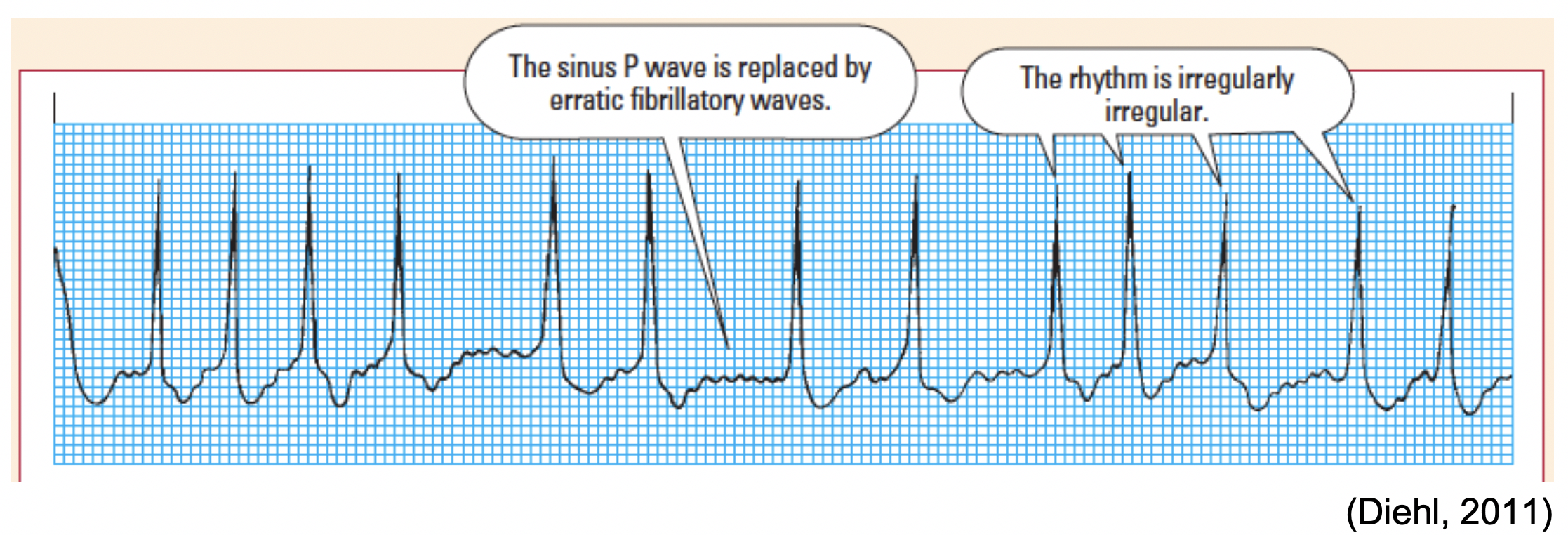
During atrial fibrillation, the top chambers of the heart (the atria) lose their normal, organized electrical activity and develop a chaotic, unorganized rhythm that makes the bottom chambers (the ventricles) beat irregularly. Atrial fibrillation often causes an erratic fluttering sensation in the chest ...
What are the risk factors for atrial fibrillation?
Risk factors for atrial fibrillation include: 1 Age older than 60 (although afib can affect a younger population as well) 2 Being white and male 3 Sleep apnea 4 Heart failure 5 Heart valve disease 6 High blood pressure 7 Coronary artery disease and heart attack 8 Obesity 9 Family history of atrial fibrillation 10 Surgery on the heart 11 History of rheumatic fever 12 Infection, such as pneumonia or endocarditis 13 Lung disease, such as asthma or chronic obstructive pulmonary disease 14 Metabolic conditions, such as hyperthyroidism or diabetes 15 Use of alcohol and/or stimulants 16 Congenital heart disease and surgical repair of congenital heart disease
What happens when your heart beats irregularly?
With atrial fibrillation, the heart's upper chambers beat irregularly, affecting blood flow to the heart muscle and to the rest of the body. This can cause blood clots leading to a stroke.
How long does paroxysmal atrial fibrillation last?
Paroxysmal atrial fibrillation refers to atrial fibrillation that comes and goes on its own. The episodes may last anywhere from a few minutes to several hours, and sometimes several days. Persistent or chronic atrial fibrillation lasts for more than seven days.
Can atrial fibrillation cause stroke?
Because of the sluggish movement of blood through the atria during atrial fibrillation, there is a tendency for blood clots to form in some patients. This can lead to complications such as stroke.
Does atrial fibrillation cause shortness of breath?
Atrial fibrillation often causes an erratic fluttering sensation in the chest (palpitations) and makes the heart a less efficient pump. This may result in symptoms of weakness, fatigue, dizziness, or shortness of breath. However, some patients who have atrial fibrillation are completely unaware of it and have no symptoms at all.
Popular Posts:
- 1. which institute is best for medical transcription course in bangalore
- 2. what is financial management course
- 3. what is the best lsat prep course to take
- 4. how to write a college course curriculum
- 5. how long is billing and coding course
- 6. how long is medical assistant course
- 7. what is pmp training course
- 8. what is a course management system
- 9. what is business management course
- 10. how long is hvac course